Prerequisites
Company Vision and Mission
A solid Product Vision should align seamlessly with the overarching Company Vision. The company's long-term goals, its values, and its aspirations serve as the foundation upon which the Product Vision is (or should be) built. This alignment ensures that your product contributes meaningfully to the organization’s overall objectives, fostering a coherent and unified approach.
The company mission serves as a guiding star, directing the organization toward its intended purpose and impact. An effective Product Vision, in turn, should be an extension of this mission, telling your teams how the product will fulfill the company's broader objectives. Establishing a clear connection between the product's mission and the company's mission is essential for cultivating a sense of purpose and direction.
The Company Vision outlines where you want to be. It communicates both the purpose and values of your business. Sometimes referred to as “why do you exist”.
To you as a product professional, this implies that having a Company Vision and/or Mission are prerequisites for crafting the Product Vision. If either of these is unclear or not set at all, please don’t waste your time and head to your leadership team: the starting point is in their hands.
Recommended tools and models
Utilizing frameworks can be instrumental in aligning the Product Vision with broader business considerations. These tools provide you with a holistic view of the business, prompting thoughtful considerations about value propositions, customer segments, and revenue streams. Additionally, other tools that complement this framework can enhance the strategic planning process.
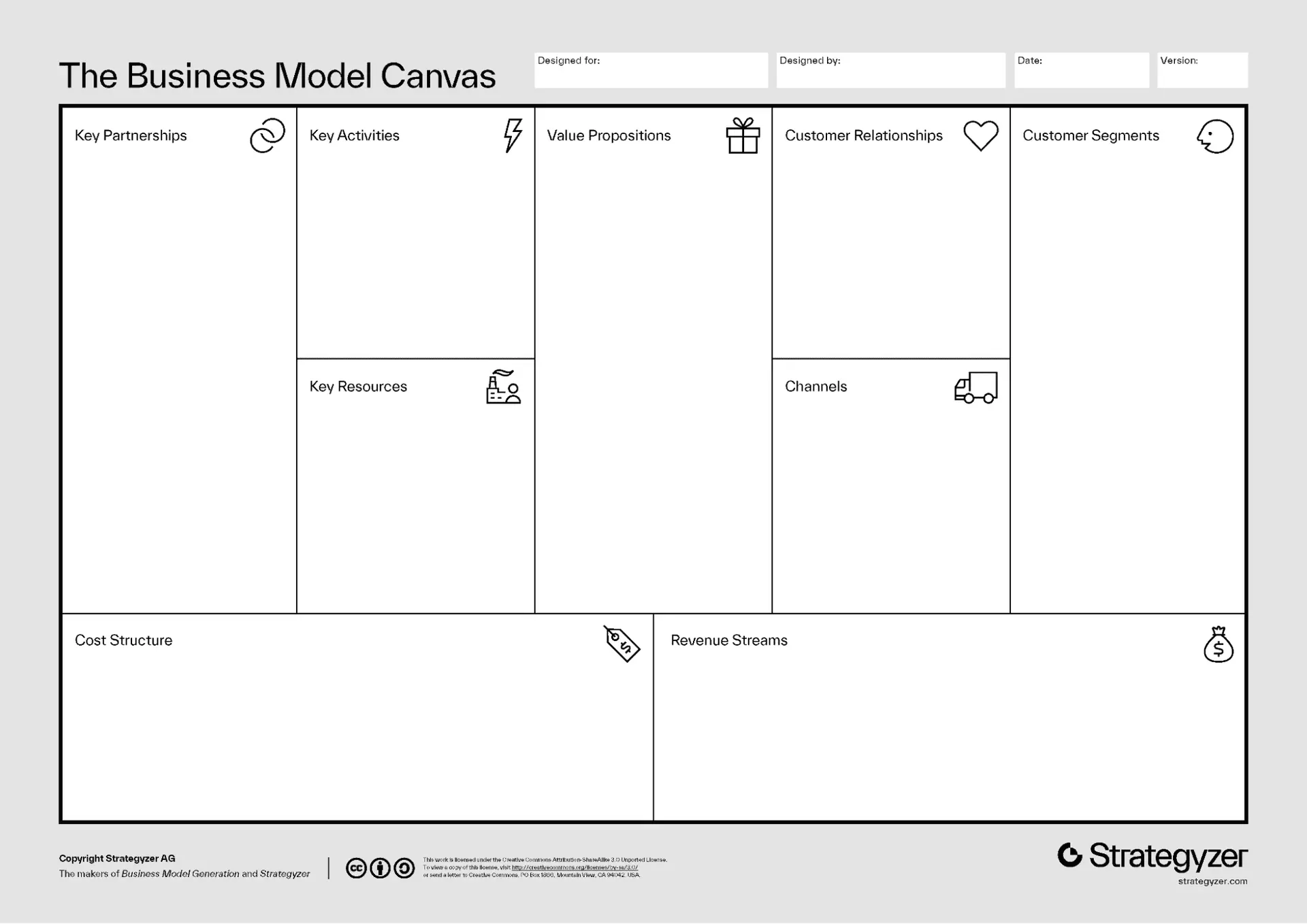
Business Model Canvas
At 25Friday, the Business Model Canvas introduced by Alexander Osterwalder is our personal favorite. It proves invaluable in visualizing key elements of a business. It facilitates a comprehensive exploration of a company's value proposition, customer segments, channels, and revenue streams. Involving this canvas in the Company Vision context allows for a structured examination of how the product contributes to the overall business model.
Other tools
Beyond the Business Model Canvas, other strategic tools and models can fulfill a similar role in refining the company's vision and ensuring its alignment with the product. Depending on the industry and context, well-known tools such as SWOT analysis, PESTLE analysis, or the Value Proposition Canvas provide the insights and perspectives you need.
Product Vision
Now that the prerequisites for a Product Vision are clear, let’s dive deeper into the Product Vision theory.
Part of the product vision is a forward-looking statement that articulates the desired future state of a product. It encapsulates the product's purpose, the value it delivers to users, and its role within the market. It serves as a source of inspiration for the development team, aligning their efforts towards a shared goal, and provides clarity to stakeholders about the product's long-term trajectory.